Sunday, June 10, 2018

Key Buoy marks the Star-Spangled spot

This past Friday, June 8, the crew of the USCG Cutter Rankin again performed what may be its favorite duty of the year — the dropping of the commemorative Francis Scott Key Buoy at the approximate spot where Key, during the War of 1812, penned what was to become the national anthem.

I was honored to be a guest aboard the Rankin in 2012 when the buoy was taken to the spot near the Francis Scott Key Bridge it occupies from early June through November each year.

The following is the resulting story that was originally published on Dundalk Patch on June 11, 2012:

Francis Scott Key Buoy Marks the Spot
The commemorative buoy on Friday was placed in the approximate spot where Francis Scott Key penned the words to "The Star-Spangled Banner."

By Marge Neal Patch Staff

The Francis Scott Key Memorial Buoy may not aid boaters in a navigational sense.

But the red, white and blue buoy, now firmly anchored near the Francis Scott Key Bridge, does serve to remind boaters of the historical significance of the spot marked by the floating monument—it gently bobs in the approximate spot where Key penned the words to "The Star-Spangled Banner" during the War of 1812.

Traveling across the Key bridge from Dundalk toward Glen Burnie, the buoy is visible over the right side of the span.

Each year, the crew of the U.S. Coast Guard Cutter James Rankin—a buoy tender also known as the Keeper of the Chesapeake Bay—sets the buoy in a ceremony witnessed by guests invited for the occasion.

USCG Cutter Rankin crew members prepare to drop the Francis Scott Key Buoy near the bridge of the same name on June 8, 2012. Photo by Marge Neal

Placing such a buoy was the idea of the late Ben Womer, the longtime president of the Dundalk-Patapsco Neck Historical Society.

The hard work and dedication of Womer and the society were recognized during the ceremony.

The one-of-a-kind marker was taken to its seasonal home on June 8, where it will remain through November, according to the ship's crew.

Weighing about 3,000 pounds, the marker is anchored to an 8,500-pound block of cement that is attached to the buoy with a chain weighing another 3,500 pounds, crew members said.

The portion visible above water is painted to resemble an American flag, with red and white stripes topped with a field of blue with white stars.

The Francis Scott Key Buoy gets its first visitor after being set in place June 8, 2012. Photo by Marge Neal

The buoy is cleaned and gets a fresh coat of paint each spring, according to ship commander Lt. Russell Zuckerman.

Zuckerman's pride in his crew and the mission of the Coast Guard was palpable as he talked about setting the buoy, the customs and courtesies of life on a ship and the camaraderie of "Coasties."

When a bell clanged and an announcement proclaimed the arrival of a retired admiral on board the ship, Zuckerman explained that it is tradition to "ring aboard" visiting and high-ranking Coast Guard officials.

"It's a cool thing to do—it reminds us of our heritage," Zuckerman said. "And it's the right thing to do, it shows respect and gives those people their due."

Also on board the ship for the ceremony were Genna White, Tyler Mink and Tim Ertel, National Park Service rangers assigned to Fort McHenry.

Mink and Ertel, dressed in military uniforms representative of the War of 1812, provided historical interpretation throughout the three-hour cruise of the events of the war and Key's role.

After the colorful buoy was placed in its spot, Mink and Ertel joined a line of crew members that saluted the marker while "Taps" and "The Star-Spangled Banner" were played over the ship's loudspeakers.

The rangers each then volleyed a shot to honor the spot where, by the dawn's early light in September 1814, Key could see that, after a night of battle, Baltimore had been successfully defended and "our flag was still there."

Friday, June 8, 2018

Missing a community member — and his dog

Without quite realizing it, we build peripheral communities in many different slices of our lives. 

Perhaps we begin to recognize certain cars each morning as we commute to work. We are happenstance "time buddies" with people whose names we will never know.

Or perhaps we smile and say hi to people we see routinely at the grocery store because we all happen to shop at 11 on Wednesday mornings.

I have a favorite little waterfront park that I visit many times a week. Some days, I go after work to chill and hang out before I go home. Other days, when I don't work, I go earlier in the day to force myself out of the house.

This park has been a regular destination for me for three or four years. And here, I have developed yet another closed community of anonymous regulars. I don't know any of their names but recognize them by vehicle and park deeds.

There are lovers who meet for lunchtime trysts; freelance renovators who fill the park's Dumpsters with their construction debris; daycare moms who pull up in minivans that dispense clown-car-like amounts of screaming children who all rush to the playground; the mechanics who work on car engines, replace brakes and change oil; the school bus drivers who cool their heels between runs; the delivery drivers who stop to use the portable toilets; and, perhaps most importantly, the regular dog walkers.

I hadn't really given any formal thought to this little community until I realized something was off; someone was missing.

No matter the month, no matter the weather, there is a man who walked an older, buff-colored cocker spaniel every day of the week between 4 and 5 in the afternoon. I'm assuming this was his routine every day; I can attest to him being there the four to five days a week I'm there. The dog was a gentle, slow, lumbering senior who took his sweet time checking out what seemed to be every square inch of the park. His owner patiently walked along behind him, never rushing the pup and allowing him to pursue all those enticing sights and smells, no matter how long it took.

I once told the human he was the most patient dog walker I had ever seen.

And then all of a sudden, I realized I hadn't seen them in a couple of days. Weather never keeps them away so I instantly worried about the man and his canine companion.

I'm even more worried now because I haven't seen them in a couple of weeks. I assume something happened to the dog and pray nothing happened to the man.

We exchanged a few comments over the many months we were park visitors but I don't know his name (though I would recognize his car). It breaks my heart I may never know what happened.

I can only hope that perhaps he's been on vacation and I soon see him and his dog back on their rounds. Worst case scenario, I hope I see him, when he's ready, walking a new pup.

And if I'm lucky enough to see him again, I'm going to formally introduce myself and let him know how worried I was about him.

I sure hope I get that chance. Because whether he realizes it, we're community.

Saturday, May 26, 2018

Blade Mouth-Runner

My blogging idol, Julia Jackson McCready, wrote this past week of a community tussle regarding an overgrown patch of grass at a rather visible and prominent spot in Columbia.

It seems the patch of land’s ownership is in question, and none of the three parties involved seemed willing to cut the grass fast enough to satisfy the chief complainant, who made her gripes public on Facebook.

I watched the conversation go back and forth and then giggled as I sent Julia a private message telling her about the major differences between her town and mine (the little peninsular community of Edgemere).

I told Julia that in less time than it would have taken to read all of the back and forth about the Columbia grass tragedy, a crew of Edgemere residents would have organized, loaded some mowers into the beds of a few pickup trucks, reported to the overgrown spot and mowed the area in question. For good measure, the group would probably edge, trim and rake and bag the thigh-high grass so the end result was beautiful.

I told her about a recent example of someone complaining about the condition of a local playground. The individual was quick to complain that the Baltimore County Department of Recreation and Parks was neglecting the park and to voice concerns about the possibility of children being injured on the deteriorating equipment.

A civil conversation ensued in which other neighbors, more informed than the original complainant, told her the park in question was privately owned by a community association, the members of which are aging and unable to physically or financially keep up with park maintenance.

The online conversation ended with a group of people ready to inspect the equipment's condition, assess its needs and buy the materials necessary to fix and beautify the area. Plans were made and carried out, and soon, before and after pictures were posted online as well.

There is no way, I told Julia, that my community would waste much energy arguing or complaining about the height of the grass and whose responsibility it was to cut it. My neighbors would join forces, cut the grass and then go out for a beer afterward.

And then, as if on cue, this appeared on Facebook:


I just smiled and whispered softly to myself, “I rest my case.”

Thursday, May 24, 2018

Shiny futures

As the school year winds down and the Class of 2018 prepares to accept its high school diplomas, I invite you to get a glimpse of some the accomplished faces of that class.

On a side note, most of this class was born in 2000. Depending on where you stand in the debate as to when the 21st century began, this class is either the last graduating class born in the 20th century or the first born in the 21st.

Baltimore County Public Schools officials are publishing a new senior spotlight each day through May 25, the last day of classes for seniors.

I don’t know any of these kids, but reading their stories made me proud of them and excited for their futures.

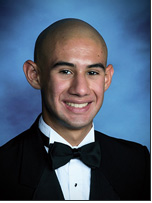
I was introduced to this series of biographical sketches after seeing the link to Kenwood High (my alma mater) senior Christopher Ospina posted on Facebook. Christopher is headed to the U.S. Naval Academy this summer.

Christopher Ospina (photo from BCPS website)

After reading through a few of the profiles, I came to the conclusion each story was more impressive than the previous one. Stories of kids coming to this country, knowing no English, as recently as two years ago and satisfying graduation requirements in just those two years; stories of kids who hope to become doctors, architects, public servants and dancers; kids who hope to be the first of their families to graduate from college; kids who are working to help the family and serving as mentors to younger siblings.

With the news of four Baltimore teenagers charged with first-degree murder in the death of Baltimore County Police Officer Amy Caprio plastered everywhere, it’s important to remember that there are scores of accomplished, focused, dream-driven young people for each one in the news for all the wrong reasons.

When you have a moment, check out these stories, revel in the accomplishments of these young people and remember they are the ones representative of their generation and our hope for the future.

Wednesday, May 23, 2018

Schoolhouse Thanks

I’m fortunate to know a lot of educators.

Whether they are former teachers I was blessed to have had or current educators I am blessed to have met — including many gifted and talented classroom leaders and administrators I met during my tenure as the Frederick News-Post education reporter — I am surrounded by folks who chose to devote their lives to essentially raising up and molding other people’s kids.

It can often be a tough, red-tape-filled, hands-tied, frustrating — and even life-threatening —experience that makes me wonder why any sane, rational, intelligent, could-be-doing-anything-else human being would want to pursue such a career.

And then something like this pops up:


This gem of a thank-you note was presented to Fredrick County Public Schools counselor Heather Quill by one of her “babies” at Parkway Elementary School. In case it's difficult for you to read, here's the text of the note: "Dear Ms. Quill, Thank you. I love what ya gave me. Here a thank you song, la-la, la-la! Thank you so much yeah. Thank you what ya did made me so happy. THANK YOU!"

Heather, one of the more outstanding educators I met in my FNP travels, is blessed to routinely receive such notes of appreciation from her young charges. And when she receives these little gifts, she usually posts them on social media to remind the rest of us that there is hope in the world; that our young students are learning social graces such as the importance of sending thank-you notes; and they are extremely appreciative of the smallest of gestures that help them succeed and also send  the subtle message that they are worth a little extra effort and deserve to have all the tools that other, more affluent classmates might take for granted.

In this case, Heather was able to give this student a few school supplies he or she did not have and the response from the child needs no explanation.

In 2010, Heather worked at Frederick’s Monocacy Elementary School, a school experiencing a renaissance thanks to an energetic, talented, inspired and loving staff then led by a tornado of a principal, Jason Anderson, and assistant principal, Sue Gullo.

Through a variety of innovative approaches, many volunteer hours on the part of staff members, including Saturday morning education sessions disguised as “fun time,” a creative and passionate PTA and other initiatives, Monocacy was enjoying a resurgence as student achievement and morale soared.

Anderson and his team let me practically live at that school for much of a school year and witness the ups and downs and the true inner workings that picked that school up by the boot straps and gave kids a reason to believe, a theme that was stamped all over that building.

That up-close-and-personal look at the school is what allowed me to witness the caring work of Heather, who served as both a counselor to students and a resource teacher for her fellow educators. Her passion for the mission was palpable and her love for her students was unmistakable.

The journalistic result of that time spent at Monocacy was a knock-out Back-to-School enterprise package that to this day still ranks in my top three favorite writing efforts of my career.

Knowing Heather’s style, how she relates to students, how she doesn’t take “no” for an answer and how she will go to the ends of the earth for her babies, it doesn’t surprise me when she gets these heartfelt messages from children who, no matter how young they might be, realize what a gift she is in their lives.

Thanks for sharing those messages of love and appreciation, Heather, and keep them coming. Because we all need to see the positive messages they provide.


Tuesday, May 22, 2018

Rest in Peace

I had a couple of cute, fun topics I was considering for a blog post today and was looking forward to getting off work and doing some silly, just-for-the-heck-of-it writing.

I woke up this morning with a “got up on the wrong side of the bed” attitude, mixed in with a little bit of the blues. I figured penning — keyboarding? — a light-hearted blog post after work might be just what the doctor ordered.

And then, a little after 2 p.m., word filtered into the newsroom that a Baltimore County police officer was shot while responding to a call in the Perry Hall community.

The news sucked the air out of the newsroom and as subsequent bits and pieces of information became available, those in the know and familiar with the protocol in situations like this one knew the outcome wasn’t going to be good. Rather than being flown to the University of Maryland's Shock Trauma Center, the fallen officer was instead taken to nearby Franklin Square, and BCPD Chief Sheridan was at the hospital soon after the news spread.

According to multiple news outlets, the officer, whose identity had not been disclosed as of early Tuesday morning, was declared dead at about 2:50 p.m. My heart collapsed.

It’s not clear what caused the officer’s death; there are reports she was run over by a vehicle driven by the suspects she was called to investigate. For this report, the cause of death matters not; the fact remains that a first responder lost her life while performing her duty to protect Baltimore County citizens.

I’m still trying to come to grips with the sudden death of Baltimore County Executive Kevin Kamenetz, who died of cardiac arrest May 10. It just doesn’t seem real that a man who was seemingly healthy and vibrant died so suddenly, and my heart still skips a beat every time I see a reference to the “late” county executive.

And here we are, less than two weeks later, and the Baltimore County government family is again rocked with the loss of a member, this time at the hands of violence on the streets of a fairly well-to-do suburban neighborhood.

A woman went to work as usual Monday morning and did not return home that afternoon. We lose sight of the fact that our first responders do indeed put their lives on the line every time they report for duty. A death in the line of duty such as this one reminds us that danger is a very real part of the day-to-day job these special people accept as a routine part of their calling.

My heart breaks for this officer’s blood family, her blue family and all of her friends and acquaintances.

And my heart breaks for our broken society. The violence just never seems to end and, as childish as this may sound, I’m just sick of it.


Friday, May 18, 2018

Gold lives matter

In the midst of bleak, sad, devastating news from local to national and global levels, I bring you this piece of refreshing, hopeful, uplifting news.

As you may know from local newscasts, Frederick County took the brunt of the recent rainstorms, getting inundated and pummeled with inches and inches of rain in a short period of time, resulting in devastating damage, including buckled and washed-away roads, collapsed bridges and countless homes, businesses and government buildings taking on significant amounts of water. Public transportation was interrupted, first responders were kept busy attempting to assist people trapped in dangerous situations and local journalists risked life and limb to bring those stories to the public.

The City of Frederick is the proud home of an extremely innovative flood control system, the design and construction of which was spurred by a devastating flood in 1976 that pretty much destroyed the downtown district.

The ahead-of-its-time system created an underground system of conduits that control and contain Carroll Creek, a natural body of water. It was the waters of Carroll Creek that took Frederick to its knees in 1976.

To make this functional but rather ugly system more palatable, elected leaders at the time pitched the idea of a linear park, complete with a “fake” creek atop the flood control system that would run the length of it and would, when completed, be a model open space that would also attract economic development along its sides.

This past week, the system got quite the workout. As it was designed to do, the flood control system deposited much of the flood waters into Baker Park. The current mayor was quoted as saying something along the lines of “the fact that Baker Park is flooded is good because that means downtown Frederick is not flooded.”

I give you all this background because I realize that few of my Baltimore friends would be that familiar with the Carroll Creek project. But while the city was saved and Baker Park will dry out, there were thousands of victims of the success of the flood control system — gold fish were washed from the park’s Culler Lake, where they became stranded in huge puddles that would eventually dry up, leaving the fish high and dry as well.

Understandably, rescuing fish is not a high priority when lives and property need to be protected. Frederick residents were encouraged to go to Baker Park with buckets and nets and rescue fish for release in their own backyard ponds.

It did my heart good to see the many social media posts with photos and videos of families delicately making their way through murky puddles and squishy stands of soggy grass, gently picking up fish and placing them in life-saving buckets of water.

It’s a very small, seemingly insignificant positive thing to come out of a storm that will probably end up costing tens of millions of dollars, but definitely something to wrap our hearts around.

Children search for fish swept out of Culler lake and into an adjacent section of Baker Park two days after floodwater poured into the lake from Carroll Creek. City officials encouraged the public to catch and adopt the invasive species of fish rather than placing them back in the lake or creek. Photo by Graham Cullen